Wednesday, October 28, 2015

October Offerings: Horror Movie Reads

I love horror movies. I always have, even when I was probably  too young to be watching them. But when your older siblings are babysitting and offer to let you stay up past 9 PM if you'll watch Pet Sematary with them, you don't pass up the opportunity! (Even if you spend the next few years thinking that every awful thing from the movie is living in your closet.)

With horror films as popular as ever, it comes as no surprise that there are an endless amount of books about horror movies published in the last few decades, from movie guides to behind-the-scenes memoirs and everything in between.  I've complied a selection of some interesting horror movie books, categorized by subject. Happy reading!

Essentials, Must-Sees, and Watch-Before-You-Die

Horror 101: The A-List of Horror Films and Monster Movies by Aaron Christensen

Essential Horror Movies: Matinee Monsters to Cult Classics by Michael Mallory

101 Horror Movies You Must See Before You Die by Steven Jay Schneider

The Horror Show Guide: The Ultimate Frightfest of Movies by Michael Mayo

Horror by Decade or Genre

The Slasher Movie Book by J. A. Kerswell

Universal Studios Monsters: A Legacy of Horror by Michael Mallory

Monster Mash: The Creepy, Kooky Monster Craze In America by Mark Voger

Sixties Shockers: A critical Filmography of Horror Cinema, 1960-1969 by Mark Clark

J-Horror: The Definitive Guide to The Ring, The Grudge and Beyond by David Kalat

Ten Years of Terror: British Horror Films of the Seventies by Harvey Fenton and David Flint

The Hammer Story by Marcus Hearn and Alan Barnes

The Very Witching Time of Night: Dark Alleys of Classic Horror Cinema by Gregory William Mank

It Lives Again! Horror Movies in the New Millennium by Axelle Carolyn

The Making Of...
Crystal Lake Memories: The Complete History of Friday The 13th by Peter M. Bracke

Chain Saw Confidential: How We Made the World's Most Notorious Horror Movie by Gunnar Hansen

Crimson Peak: The Art of Darkness by Mark Salisbury

The Making of George A. Romero's Day of the Dead by Lee Karr

Jaws: Memories from Martha's Vinyard by Matt Taylor

Amicus Horrors: Tales from the Filmmaker's Crypt by Brian McFadden

Bits and Pieces

Danse Macabre by Stephen King

Monsters in the Movie by John Landis

Writing the Horror Movie by Marc Blake and Sara Bailey

The Horror of It All: One Moviegoer's Love Affair with Masked Maniacs, Frightened Virgins, and the Living Dead by Adam Rockoff

Hollywood Monster: A Walk Down Elm Street with the Man of Your Dreams by Robert Englund

The Monster Show: A Cultural History of Horror by David J. Skal

Monster Mash: The Creepy, Kooky Monster Craze In America by David J. Skal

Wes Craven: The Man and his Nightmares by John Wooley

Too Much Horror Business by Kirk Hammett

Tuesday, October 13, 2015

October Offerings: The Art of Mourning (Book Recommendations)


Widow's Weeds and Weeping Veils Revised Mourning Rituals in 19th Century America by Bernadette Loefell-Atkins

Widow's Weeds and Weeping Veils explores the culture of death and mourning that perveated almost every aspect of Victorian society. In the Victorian eera, mourning rituals and practices became more tangible and visible than in previous eras; from widow's weeds to various stages of social obligatory mourning periods--and everything in between--this book will take you on a tour through the complicated yet fascinating art of Victorian mourning.


In Death Lamented: The Tradition of Anglo-American Mourning Jewelry by Sarah Nehama

Mourning jewelry is not all that uncommon today (with necklaces containing creamted remains being the most common in the modern era) but at its heights in the 17th through 19th centuries, mourning jewelry was a cornerstone of the mourning process that utlized many different types of jewelry, artistic styles, and various social contexts. In Death Lamented explores how mourning jewelry developed from the 17th century through the 19th century and features photographs and historical commentary.


Fashionable Mourning Jewelry, Clothing, & Customs by Mary Brett

This Schiffer book is intended for collectors--it comes complete with price guides circa 2007 and a forward discussing the rising value of antique mourning pieces--but it is a treasure trove for anyone interested in mourning jewelry and other mourning pieces from the Victorian era. This full-color catalog features 300 pictures of everything from mourning jewelry, mourning portraits, mourning fashion, poetry and sympathy letters, antique death announcements, and more.

Friday, September 25, 2015

From Fiction to History: 'The Heretic's Daughter'


Fiction: The Heretic's Daughter by Kathleen Kent


 Sarah Carrier, the young daughter of Martha Carrier, feels constantly at odds with her little world, where work and life are hard but not always that long. But the trials of childhood are nothing compared to the brutality and danger that sweeps into Salem, Massachusetts as the hysteria over witchcraft takes hold of the small village. Sarah's mother is one of the first to be accused and imprisoned on the charges of witchcraft, and Sarah can do little to help her mother--or avoid suspicion herself. Kathleen Kent is a 10th generation descendant of Martha Carrier, which makes this fictional take from Sarah's point of view even more poignant.

History: The Salem Witch Trials, a Day-by-Day Chronicle of a Community Under Siege by Marilynne K. Roach


'The Salem Witch Trials' is an incredibly thorough look at the Salem Witch Trials through a day by day chronicle of Salem Village in 1692 and 1693. Each entry includes information about any important happenings in the village that day, known weather conditions, as well as other pertinent information designed to give the reader an inside look at Salem, its inhabitants, and the trials that made the village infamous. Marilynne K. Roach's book places the events in Salem in their chronological context, allowing readers to have a clearer view of what happened--and, in many cases, a clearer look at why it may have happened.

History: A Storm of Witchcraft, The Salem Witch Trials and the American Experience by Emerson W. Baker


In A Storm of Witchcraft, Emerson Baker argues that the Salem Witch Trials were the result of a "perfect storm" rather than one particular factor, such as the popular theories regarding ergot poisoning or hysteria influencing the girls of Salem to accuse others of witchcraft. A Storm of Witchcraft takes a look at the events in Salem--and the American colonies as a whole during this time period, which saw a general rise in accusations of witchcraft--through a broader political and historical context. Baker also explores how the trials have inspired an enduring legacy, despite early attempts by the Puritan government to suppress the trial from the public mind.

Tuesday, September 8, 2015

From Fiction to History: Book Recommendations ('In the Shadow of Blackbirds')

Fiction: In the Shadow of Blackbirds by Cat Winters

When 16-year old Mary Shelley Black is sent to live with her aunt after her father is imprisoned for refusing to fight in the war, she finds once familiar streets and people forever changed. The war and the influenza epidemic have cast a black shroud over every aspect of life, and people increasingly turn to the supernatural in their bleakest moments.  Mary agrees to sit for a "spirit photograph" for an old friend who proclaims he can contact the dead, though the science-minded Mary doesn't take much stock in the otherworldly. But when the ghost of a soldier begins to visit her, Mary is forced to reconsider her personal views--and find a way to ease his restless spirit.


History: Faces of the Living Dead: The Belief in Spirit Photography by Martyn Jolly


In 'Faces of the Living Dead,' Martyn Jolly takes a look at the development and practice of spirit photography from its earliest forms in the 1870s through the 1930s, when the practice finally fell out of favor. In addition to exploring the 'whys' behind people's desire to belief in photographs of their loved one's spirits, Jolly goes into detail about how photographers used various tricks and techniques to create their unique images.

History: The Great Influenza, The Story of the Deadliest Pandemic in History by John M. Barry


The influenza pandemic of 1918 killed three to five percent of the world's population in just over one year and affected just about every corner of the globe. The pandemic is considered to be one of the deadliest natural disasters in recorded history and is notable not just for the sheer number of deaths and infections, but for the fact that young, healthy adults were more likely to succumb to the disease than children or the elderly. The Great Influenza by John M. Barry is an extensive, comprehensive look at how the pandemic began, why it was able to spread so far and fast, and what we can learn from the '1918 flu' in preparation for future pandemics.

Monday, August 31, 2015

Quick Picks: Three New/Upcoming Chinese History Books

Time for some quick picks! Here are three new or upcoming Chinese history books that have caught my eye:

Runaway Wives, Urban Crimes, and Survival Tactics in Wartime Beijing, 1937-1949 by Zhao Ma [Harvard University Asia Center, September 2015]


Women living in wartime Beijing faced many challenges, including threats from the Japanese occupational forces, poverty from political and social upheaval, and even civil war. 'Runaway Wives' uncovers the ways that women used underground networks and even criminal activity to keep themselves and their families alive.

Garden of Perfect Brightness: The Lost and Most Splendid Imperial Garden in China by Guo Daiheng [Shanghai Press, April 2016]

A look at the Old Summer Palace, built in 1707 and described as the "garden of all gardens"; the palace and its gardens, once heralded as the most beautiful in the world, were destroyed and looted by the British-French allied army in 1860.

City of Marvel and Transformation: Chang'an and Narratives of Experience in Tang Dynasty China by Linda Rui Feng [University of Hawaii Press, August 2015]

Chang'an (present day Xi'an) was the imperial capital of China during the Tang Dynasty; during its heyday, Chang'an was a thriving cultural center that inspired developments in technological, social, scientific and artistic circles. 'City of Marvel and Transformation' puts a special focus on the writings of educated men who came to the city seeking to take the civil service examinations.

Wednesday, August 26, 2015

From Fiction to History: Book Recommendations ('Revolution is Not a Dinner Party')

I love historical fiction. Historical fiction I read in elementary school (willingly or not!) played a large part in encouraging me to become interested in actual history, and even today I find myself picking up non-fiction books to find out more about the real events and history behind some of my favorite fiction novels! In the same vein, I've decided to start a series of posts recommending some non-fiction reads based on historical fiction favorites. I was checking over my Goodreads 2015 Challenge earlier today and thought that the historical fiction I've read this year would be an excellent place to start.

Fiction: Revolution is Not a Dinner Party by Ying Chang Compestine


Ling, the central character of Revolution is Not a Dinner Party, is only 9 years old when the world around her begins to crumble due to the increasingly heightened policies under the Chinese Cultural Revolution; her parents, two wealthy surgeons who have provided their daughter with a comfortable life and education, find themselves under increasing suspicion and ultimately punishment for their perceived anti-revolutionary lifestyle and beliefs. Ling, too, is increasingly ostracized for being "bourgeois"--for having long hair, new clothes, and a comfortable life. The events in Revolution is Not a Dinner Party were drawn from Compestine's own experiences as a young girl in Wuhan.

History:  Life and Death in Shanghai by Nien Cheng


Life and Death in Shanghai
is a deeply personal and detailed account of one woman's long, terrible imprisonment during the Cultural Revolution. Cheng's life made her the perfect target: she was the widow of an official of the last regime, formally educated in London, employed at Shell Oil, and enjoyed a comfortable, wealthy lifestyle. Cheng's imprisonment began after she refused to admit that any of this made her an enemy of China, and what followed were 6 years of horror--and many more years of seeking justice.

History: Blood Red Sunset: A Memoir of the Chinese Cultural Revolution by Ma Bo 


As a Red Guard, Ma Bo did not hesitate to do the work that Mao's government demanded of its soldiers: ransacking homes for anything that went against the party's guidelines, beating suspected anti-communists in order to make them confess, and even participating in . But when Ma Bo made a careless comment about a party leader, he found himself on the other side--imprisoned for eight years while enduring severe beatings, physical torture and psychological abuse. Blood Red Sunset is Ma Bo's memoir of those terrible years.

Wednesday, June 3, 2015

WWII Historical Fiction from Gudrun Pausewang

I read a lot of WWII historical fiction aimed at teenagers and middle-grade readers and through the years I've noticed an interesting trend; namely that many HF books set in this era written by European authors tend to be more realistic, dark and even bleak, while many books written by American authors tend to shy away from some of the grittier details and usually end with some kind of hopeful note or message. There are exceptions to this rule, of course, but as a general trend I think it holds true.

Out of all the European authors to pen books set in WWII for younger readers, Gudrun Pausewang is my favorite. Her books do not shy away from realistic, even shocking, details nor do they gloss over the terrible circumstances experienced by the characters in her stories. The following three books are, as far as I am aware, the only three of her WWII-era novels which have been translated into English.

I highly recommend all of them for readers interested in WWII historical fiction, although I do think that most younger readers should be guided through the books (particularly The Final Journey) with an adult due to the subject matter. Pausewang does not sugarcoat, and the books can be difficult to get through--and difficult to forget once you've read them. But that is precisely why I consider her books some of the best WWII historical fiction out there, whether you're 13 or 93.


Dark Hours by Gudrun Pausewang

 Dark Hours is set in the dying days of WWII Germany and follows a young teenager named Gisel who is fleeing the city with her two younger siblings, including an infant, along with her pregnant mother. Gisel and her brothers are separated when their mother goes into labor and they must attempt to travel to the countryside on their own. They are at a train station when an air raid siren goes off, and find themselves trapped in the air raid shelter bathroom, unable to leave because of rubble blocking the way. But they are not alone: an injured soldier is trapped in the men's bathroom on the other side of the wall, and as the hours tick by, Gisel, her brothers, and the soldier must do all they can to survive. As Gisel fights to keep herself--and her siblings--alive, she must confront the realities of the war, the Nazi Regime that has crumbled away, and her own hopes for the future.


Traitor by Gudrun Pausewang

Traitor begins in 1944 with a young teenager named Anna returning to visit her family in the small village of Stiegnitz, Mysterious tracks in the snow lead her to her family's barn, where she discovers an escaped Russian prisoner-of-war who is starving, ill and helpless. Anna is faced with an impossible decision: If she turns him in to the police, he will be killed. If she does nothing, he may be found and her family could be marked for not turning him in. She ultimately decides to hide the man, named Maxim, and care for him, even though it means her own life is forfeit if she were to ever be discovered. As the months of secrecy drag on, Anna becomes weighed down by the knowledge that each step she takes to save Maxim brings them both closer to discovery.


The Final Journey by Gudrun Pausewang

The Final Journey opens with an 11-year old girl named Alice being forced into a cattle car with her doting grandfather and almost 50 other people. Alice does not know where she's going, nor why they have been forced onto the car, although her grandfather attempts to placate her with answers that she knows aren't quite right. As the journey on the train continues, Alice and the other men, women and children forced into the car must deal with the mundane details of human life in an extraordinary setting: basic bathroom functions become a fiercely debated topic, a pregnant woman goes into labor and must give birth without any real medical care, and food and water become scarce and violently defended resources. Alice, who has been kept naive to the real circumstances of her parent's disappearance weeks earlier, begins to learn the secrets of life--including her own life--as she takes what will be her final journey.

Monday, April 13, 2015

Selected Books about Titanic's Passengers and Crew

Wednesday will mark the 103rd anniversary of the sinking of the Titanic. The first and last voyage of the famous liner has captivated the minds of the public since the moment the news of its sinking reached the shore. For the past century, everything from films, history books, novels, plays, and even merchandise have found their way into the hearts and homes of those with a fascination for the doomed ship--whether they are interested in its its structure and mechanics, its role in maritime history, the miniature display of Edwardian society that filled its decks, or the lives and deaths of the passengers and crew.

The men and women who survived or died during the tragedy have left varied legacies. But regardless of where life took them after the tragedy--back to the sea, in the case of most crew members, or onward through the 20th century--there is no denying that history wants to remember them.

There are countless numbers of books about the Titanic--from broad histories to 21st century retrospectives and everything in between. Some of these books have even been written by the survivors of the disaster, including the works by Lawrence Beesley and Archibald Gracie, which are arguably the most often quoted books written by survivors.

But the passengers and crew haven't been ignored by historians, either. In addition to firsthand accounts, biographies and histories focusing on the people who survived, and the people who were lost that night, have been published since shortly after the ship sank.

The following are some selected books about the Titanic's passengers and crew. It is by no means comprehensive!

Memoirs/Firsthand Accounts

Titanic Survivor by Violet Jessop
Shadow of the Titanic: A Survivor's Story, a Biography of Miss Eva Hart by Eva Hart
The Truth About the Titanic by Archibald Gracie
The Loss of the SS Titanic by Lawrence Beesley 
Titanic: A Survivor's Story by Jack Thayer


Biographies

Thomas Andrews, Voyage into History : Titanic Secrets Revealed Through the Eyes of Her Builder by William C. Barnes
How to Survive the Titanic: or, The Sinking of J. Bruce Ismay by Frances Wilson
The Man Who Sank Titanic: The Troubled Life of Quartermaster Robert Hichens by Sally Nilsson
Molly Brown: Unraveling the Myth by Kristen Iversen
The Band That Played on: The Extraordinary Story of the 8 Musicians Who Went Down with the Titanic by Steve Turner
And the Band Played On: The Titanic Violinist & the Glovemaker: A True Story of Love, Loss & Betrayal by Christopher Ward

Other


Gilded Lives, Fatal Voyage: The Titanic's First-Class Passengers and their World by Hugh Brewster
Titanic: Women and Children First by Judith B. Geller
The Story of the Titanic As Told by Its Survivors
by Jack Winocour
Shadow of the Titanic: The Extraordinary Stories of Those Who Survived by Andre Wilson 
Titanic Voices by Hannah Holman

Sunday, March 29, 2015

Review: The Creation of Anne Boleyn


Who was Anne Boleyn? For centuries, the second wife of Henry VIII has been the subject of countless interpretations--fictional, biographical and everything in between. She has been cast in every possible role--as heroine and villain, as hapless victim of Henry's whims and political harbinger of her own tragic fate, as religious martyr and demonic temptress. Her story, retold countless times, continues to fascinate and inspire countless writers, artists, historians and readers.

The Creation of Anne Boleyn looks at the many metamorphoses of Anne Boleyn throughout history, which have manifested in historical works, literature and popular culture. In the first section of the book, author Susan Bordo revisits the real life of Anne Boleyn by discussing (and challenging) some of the commonly held beliefs about Anne; many of the beliefs that Bordo challenges come straight from the correspondence of one of Anne's most volatile enemies at court, the ambassador Chapuys. In challenging the facts about Anne Boleyn presented by Chapuys, Bordo also challenges many historians--modern and otherwise--who rely perhaps too heavily on Chapuys' correspondence for their interpretation of Anne Boleyn's life.

The second and third sections of the book tackles Anne Boleyn's many fictional representations after her death, including her portrayal in literature, theater and, more recently, film and television. Bordo looks primarily at Anne's portrayal in Anne of a Thousand Days, The Tudors, and The Other Boleyn Girl; brief mentions of other film and TV interpretations are also included.

In discussing how Anne has been revisited over the centuries in these fictional works, Bordo looks at broader social, political and entertainment trends that have influenced the way Anne has been depicted; despite the more recent historiography of Anne Boleyn challenging the notion of Anne as a shrewd vixen-like character, this type of Anne Boleyn, who seduces Henry VIII for her own gain and gets a 'comeuppance' in the end, has swung back around in the last decade or so with works such as The Other Boleyn Girl and in some respects, Hilary Mantel's Wolf Hall and Bring Up the Bodies novels.

The Creation of Anne Boleyn is an essential book for anyone with an interest in Anne Boleyn; it is also of interest to anyone who loves to study historiography and historical figures in popular culture.


Saturday, January 4, 2014

Book Finds: Upcoming Japanese History Releases in 2014

Hello to the new year! And hello to the many books that will find their way onto store shelves and online shopping sites in the coming year.  The following is a small selection of some of the Japanese history books set for publication in 2014 that I find particularly intriguing.

Samurai Revolution: The Dawn of Modern Japan Seen Through the Eyes of the Shogun's Last Samurai by Romulous Hillsborough [Tuttle Publishing, 25 March 2014]

Amazon.com Synopsis: 
Samurai Revolution tells the fascinating story of Japan's transformation from a backward country of feudal lords and samurai under the control of the shogun into a modern industrialized nation under the unifying rule of the Emperor. Japan's modern revolution spanned the third-quarter of the nineteenth century; knowledge of this history is essential to understand how and why Japan evolved into the nation it is today. ...
Kimono: A Modern History by Terry Satsuki Milhaupt [Reaktion Books, 15 May 2014]

Amazon.com Synopsis:
What is the kimono? Is it an everyday garment? An art object? An icon of Asian femininity? A symbol of Japan? In Kimono, Terry Satsuki Milhaupt vividly explores how these full-length robes have served all of these roles, revealing how their meaning has transformed over time. ... Written to accompany the kimono exhibition at the Metropolitan Museum of Art in September 2014, this sumptuously illustrated book tells the incredible story of a single garment and provides a fascinating new perspective on Japan’s modernization and encounter with the West.
The Sarashina Diary: A Woman's Life in Eleventh-Century Japan by Sonja Arntzen and Moriyuki Ito [Columbia University Press, 22 July 2014]

Amazon.com Description:
A thousand years ago, a young Japanese girl embarked on a journey from the wild East Country to the capital. She began a diary that she would continue to write for the next forty years and compile later in life, bringing lasting prestige to her family. ... The Sarashina Diary is a portrait of the writer as reader and a tribute to the power of reading to shape one's expectations and aspirations. As a person and an author, this writer presages the medieval era in Japan with her deep concern for Buddhist belief and practice. Her narrative's main thread follows a trajectory from youthful infatuation with romantic fantasy to the disillusionment of age and concern for the afterlife; yet, at the same time, many passages erase the dichotomy between literary illusion and spiritual truth.

Thursday, October 31, 2013

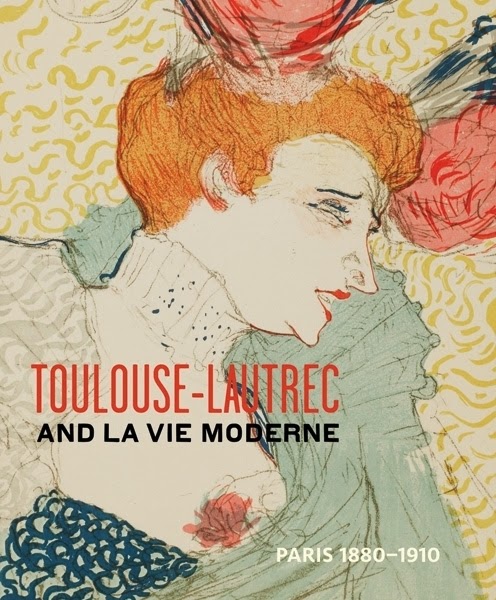
Review: Toulouse-Lautrec and La Vie Moderne, Paris 1880-1910


What did it mean to celebrate "la vie moderne" at the end of 19th century Paris? Toulouse-Lautrec and La Vie Moderne, which accompanies a traveling exhibition of the same name, seeks to explore the lives and works of numerous avant-garde artists who lived, worked and breathed the fin de siècle era.

The culture in Paris at the end of the 19th century seemed almost designed to host the vast artistic explorations, interpretations and experimentation that the city's many artists were producing at the time. Some of the most popular subjects during this 30 year period were of the city's artistic underside: its cabarets, circuses, even brothels; intimate scenes, such as domestic life or private moments, were also commonplace.  

Toulouse-Lautrec and La Vie Moderne explores the artists, and their work, who re-imagined life in painting, sculpture and other ephemera in a fresh, modern way at the edge of the new century. The scope of the book is quite vast and includes substantial sections on Realism/Naturalism, Entertainment and Performance, Symbolism/Abstraction and Portraits. There are also some sub-categories in the larger sections, such as Daily Life, Landscapes and Toulouse-Lautrec. Each section features reproductions of artwork, with most of the images reproduced in larger sized and accompanied by biographical and analytical information. The information is written clearly and is accessible for general readers in addition to those with an interest or background in art history.

image: Lucie Cousturier at the Piano by Maximilien Luce
credit: my photograph

One of the paintings that immediately caught my eye while reading was Lucie Cousturier at the Piano by Maximilien Luce. This painting of an intimate daily scene, completed around 1905, is a striking portrait that speaks in color. The woman in the portrait was not just a random art model, but a woman known in the Neo-Impressionist circles of Paris. In addition to her work arranging art exhibitions, she produced her own artwork, mostly landscapes and still life paintings. She was also an accomplished art historian and published several studies on some of her prolific contemporary painters, such as Seurat, Signac and Henri-Edmond Cross.

Maximilien Luce, the artist, was a close friend of Lucie and painted her more than once. This particular portrait of her stands out because of its broad, impressive use of color. Everything from her clothing to the walls and even to the piano itself is showcased with impressions of color using wider brush strokes to give the impression of shadows, objects and even folds in fabric. The vibrant reds, blues, greens and whites play on each other to create a colorful, stylized image of a simple, daily scene: a young woman playing the piano.

image: Le Divan Japonais by Henri de Toulouse-Lautrec
credit: my photograph

Of course, the highlight of the book is the thirty-page (or so) section on Toulouse-Lautrec and his work. An entire review could be written solely on this well-illustrated section! One of my favorite 'Lautrec' pieces featured in the book is Le Divan Japonais, a poster created to celebrate the famous Divan Japonais cafe/cabaret. Divan Japonais came at a time when the Japonisme style, influenced by Japanese art and aesthetics, was heavily in vogue among European artists.

Toulouse-Lautrec's poster depicts Edouard Dujardin, a symbolist writer, accompanied by dancer Jane Avril; the pair are viewing a concert performed by Yvette Guilbert, well known for her signature full-length black gloves. Toulouse-Lautrec's use of color in this poster is similar to other Japonisme-inspired pieces produced around the same time, which often feature monochromatic color schemes accented with pops of brighter colors. Another poster featured in the Toulouse-Lautrec section of the book, 'Jane Avril,' features a similar "Japanese" inspired color scheme.

These are just two of the many pieces of art featured in Toulouse-Lautrec and La Vie Moderne. I highly recommended this lavish exhibition album for anyone with an interest in 'la vie moderne,' French art history, or simply "art" itself!

[A review copy of this book was given to me by the publisher in exchange for my opinion.]

Thursday, April 25, 2013

An Imperial Concubine's Tale: Scandal, Shipwreck, and Salvation in Seventeenth-Century Japan by G.G. Rowley


[A review copy of this book was provided to me by the publisher upon my request.]

Life in early 17th century Japan was a wild place, even for those privileged enough to live and work in the imperial palace. The wilderness of the court, however, was much vastly different than the wilderness of life outside the protected imperial walls. To live in the court was to live in service of the emperor and to pledge one’s self to live according to the rules of society. Both men and women needed to be careful never to overstep the boundaries of their station-if they did, they risked punishment which would range from the death penalty to banishment—the cruelty of the punishment usually rested on the good will and mercy of the emperor.

An Imperial Concubine: Scandal, Shipwreck and Salvation in Seventeenth-Century Japan by G.G. Rowley is a painstakingly researched look at the life and world of an often overlooked, and yet nonetheless remarkable woman living in 17th century Japan. Nakanoin Nakako was a noblewoman who entered into the imperial service when she was about 11 years old—the imperial Daily Records of January 19th, 1601 mark her entry simply: “The young lady, daughter of the Nakanoin, entered [the palace]; she was received in the anteroom with congratulatory cups of sake and strips of kelp.” The life she entered into was one centered on the life of the emperor; when she became of age, she would be fulfill duties such as serving the emperor his meals, presenting gifts to the emperor, bathing and clothing the emperor, and entertainment. Women of age, of course, would also attend to that duty inherent to the role of a concubine, although this duty is never recorded in the meticulous Daily Records.

Nakako’s life as an imperial concubine would soon be altered forever by what came to be known as the dragon-scandal. In the sixth month of 1609, a series of hurried entries in existing diaries of courtiers record the many rumors which were circulating about the “lax behavior” of imperial palace attendants. By the end of that same month, the imperial concubines were forbidden to leave their apartments due to an investigation. And by the beginning of the seventh month, the entries in the Daily Records turn ominous: “1st day: … His Majesty took his morning cup of sake. No meal was served because no one could be found.” It was not until the fourth day of the seventh month that the dragon-scandal finally broke. Five women, including Nakako, were restricted to the custody of their parents to await further instruction from the emperor. What, exactly, was the “lax behavior” they were accused of? Although the exact nature of the accusations varies from source to source, the women were essentially accused of leaving the imperial palace to attend parties in male courtier’s homes; attending then-taboo kabuki dances outside of the palace; and potentially having sexual relations with courtiers other than the emperor. At first, the emperor had a mind to execute all of the guilty parties in the scandal, including the women. However, he was eventually convinced to only execute the two men of lowest rank, while subjecting the rest of the men and women to exile. 

Nakako herself would never make it as far as the official site of her banishment, the island of Nijima. Her boat shipwrecked in the harbor of Nagatsuro, which lies at the tip of the Izu Peninsula; a small village nearby would become her home for about 14 years.  Not much is known about her life there, but contemporary accounts do record some instances of a peaceful life; Nakako directed the dancing of the villagers at harvest festivals, and even danced to entertain them herself. She became known as “Nakako-hime”—or princess Nakako.

In 1623, Nakako—and the other women implicated in the scandal—were pardoned and allowed to return to the capital once again. Although she was a young woman of 18 or 19 when she was exiled, she was now a mature woman in her early 30s. Unfortunately, Nakako herself drops off the record for more than a decade after her return to the capital. It is likely that she lived quietly at her family home with her mother, brother, sister-in-law and her family. In 1641, however, she reappears: eighteen years after her pardon from exile, Nakako joined an aristocratic convent. She eventually became an abbess and died in 1671, the longest-lived of her family in her generation, around the age of eighty.  

Nakako did not leave behind extensive written records. Her story is primarily told through scraps of contemporary records, such as notes in the Daily Records, poetry, diaries, local records and even local legends. With some authors, this gap in historical records might result in an empty and sparse retelling of her life. Rowley, however, has the remarkable ability to flesh out the world of Nakako by using research on the lives of her contemporaries—such as the lives of imperial concubines in service of the emperor—in addition to documentation that still survives from contemporaries, including Nakako’s own father. While I’m sure readers will be left wishing that they could read something written by Nakako’s own hand, there is something almost enigmatic about the fact that all we have of her are these little traces, these little wisps, of who she once had been. A young woman, full of life, banished from the world she had known and torn from her family. This poem, composed by Nakako’s father after he received a letter from his daughter after her banishment, records his despair at their parting:

Could even the
Expected eternal parting
Compare with this?
I wonder at such a moment
Coming in my own lifetime.

I highly recommend An Imperial Concubine's Tale: Scandal, Shipwreck, and Salvation in Seventeenth-Century Japan by G.G. Rowley for readers interested in 17th century history, Japanese history, or women's history.

Monday, April 8, 2013

Hélène Berr


On the metro today I wondered: Will anybody ever be able to understand what it was like to live through this appalling tempest at the age of twenty, at the age when you are ready to grasp life’s beauty, when you are completely ready to trust in humanity?
 --Hélène Berr

I apologize for the total lack of updates in the past few months. Life has been overwhelming and I've been neglecting traditional blogging, for the most part, because it is harder to keep up with than micro-blogging. I am currently working on a review for An Imperial Concubine's Tale: Scandal, Shipwreck, and Salvation in Seventeenth-Century Japan by G.G. Rowley.

Today, however, I'd like to deviate a little from the typical book posts on Inviting History by talking a little bit about Hélène Berr ((27 March 1921 – April 1945). Hélène Berr was a young French Jewish woman living in Nazi-occupied Paris. Her journal, published in English in 2009, documents her life in a city which becomes increasingly hostile and increasingly limited to Hélène and other Jewish people living in the city. Her journal is something of a journey:

At first, her musings and day-to-day recollections reflected relatively little of the anti-Semitic policies which were being employed with increasing frequency by the occupying Nazis. She wrote of love and boyfriends, of literature and music, of worrying about passing her examinations. But her diary changed as the world changed around her. Jewish French citizens were forced to wear the yellow star, and told they may only certain cars of the Metro stations. Little by little, their freedoms are restricted or taken away entirely. Jewish citizens were eventually banned from public parks, from the theater, from crossing certain areas of Paris, and from going out at night. Hélène recounted how her non-Jewish friends tried politely not to stare and how some strangers smiled broadly at her in the street, while others pulled their children away as she passed.

Hélène, despite the harsh conditions under which she was now living, struggled to remain normalcy--as did everyone in occupied Paris. She worked at the library, listened to music, attended lectures when she was allowed, and fell in love. She worked both officially and underground for UGIF (the General Organization of Israelites in France) - filing papers, answering phones, sorting suitcases sent back by deportees, and secretly helping to place Jewish children with Christian families to be kept safe. Although those working for UGIF are supposed to be “safe" from deportation or imprisonment, it became more and more clear that no Jewish man, woman or child in France was safe from internment, deportation, and death.

Hélène’s family was finally arrested in the spring of 1944. Hélène was first held at the Drancy interment camp, then deported to Auschwitz, and eventually to Bergen-Belsen. She contracted typhus and was beaten to death by a guard for not being able to get out of the bunk, five days before the liberation of the camp.

Her last full entry in the journal details a conversation with a former camp prisoner she encountered, who told her about the execution of Russian prisoners of war at his camp: Each morning, they were rounded up and made to stand. Those too weak to stand were shot. Healthier prisoners that held up the sicker ones had their hands beaten with rifles, and those sick prisoners were then put into the wagons with corpses and thrown alive into pits. Their bodies, alive and dead, were covered with a layer of quicklime.

The last words in the entry: Horror! Horror! Horror!

Sunday, January 6, 2013

I apologize for a lack of updates on this blog (and my others) over the past few weeks! The holiday season has been taking its toll and my energy for regular blogging has been particularly sapped; however I hope to return to regular weekly posting in a few days and there are a few surprises in store! :)

Friday, November 30, 2012

Review: We Are Witnesses: Five Diaries of Teenagers Who Died in the Holocaust by Jacob Boas


We Are Witnesses: Five Diaries of Teenagers who Died During the Holocaust by Jacob Boas reveals the diaries of five Jewish teenagers who, although they recorded their experiences during the war, were not able to survive the Holocaust that rapidly consumed those around them. The diaries of David Rubinowicz, Yitzhak Rudashevski, Moshe Flinker, Eve Heyman and finally, Anne Frank are each explored through a brief biography of the history and short lives of these teenagers along with a series of quotes from the diaries or other records that they left behind. Although Boas provides ample information about the lives of each diaries, none of the diaries are quoted extensively. We are told mainly of what the teenagers wrote about, and given long quote or two--but there is too much "tell" on behalf of the author when showing would have been a more effective way of revealing the characteristics of these teenager writers to the reader. Despite this shortcoming, the book is still a worthwhile introduction which may give readers both context and a starting point for reading the full diaries left behind by those who did not survive.
"Dear diary, I don't want to die. I want to live even if it means that I'll be the only person here allowed to stay. I would wait for the end of the war in some cellar, or on the roof, or in some secret cranny. I would even let the cross-eyed gendarme, the one who took our flour from us, kiss me, just as long as they didn't kill me, only that they should let me live.
 --The last entry in the diary of Eva Heyman, before she and her family were deported to Poland. She was murdered in the gas chambers upon her arrival to Auschwitz.

Thursday, November 15, 2012

Featured Book: Tombstone: The Great Chinese Famine by Yang Jisheng

Tombstone: The Great Chinese Famine (1958-1962) by Yang Jisheng

An estimated thirty-six million Chinese men, women and children starved to death during China’s Great Leap Forward in the late 1950’s and early ‘60’s. One of the greatest tragedies of the twentieth century, the famine is poorly understood, and in China is still euphemistically referred to as the “three years of natural disaster.”

As a journalist with privileged access to official and unofficial sources, Yang Jisheng spent twenty years piecing together the events that led to mass nationwide starvation, including the death of his own father. Finding no natural causes, Yang lays the deaths at the feet of China’s totalitarian Communist system and the refusal of officials at every level to value human life over ideology and self-interest.

Tombstone is a testament to inhumanity and occasional heroism that pits collective memory against the historical amnesia imposed by those in power. Stunning in scale and arresting in its detailed account of the staggering human cost of this tragedy, Tombstone is written both as a memorial to the lives lost—an enduring tombstone in memory of the dead—and in hopeful anticipation of the final demise of the totalitarian system. Ian Johnson, writing in The New York Review of Books, called the Chinese edition of Tombstone “groundbreaking…The most authoritative account of the great famine…One of the most important books to come out of China in recent years.”

You can read more about the writing of this book and Jisheng's experiences in a two-part article here.

Friday, November 9, 2012

Wales and the French Revolution: 2012 and 2013 Releases

If you've been following the new and upcoming releases about the French Revolution, then you may have noticed an abundance of titles from the University of Wales Press! Although I haven't had the time to read any of these titles yet, they definitely look interesting.

Footsteps of Liberty and Revolt: Essays on Wales and the French Revolution by Mary-Ann Constantine and Dafydd Johnston [June 15, 2013]

All of Europe was swept up in the events of the French Revolution and the radical restructuring of society that occurred in its aftermath. This collection of essays by leading academics explores how Welsh clerics, diplomats, singers, poets, journalists, and soldiers—many of whom traveled to Paris to witness the conflict firsthand—responded to the Revolution.

Edward Pugh of Ruthin 1763-1813: "A Native Artist" by John Barrell [May 15, 2013]

Edward Pugh of Ruthin 1763–1813 is the first book to consider the work of this nearly forgotten Welsh artist and writer in detail, linking the history of art in Wales with the social history of the country. John Barrell shows how Pugh’s pictures and writings portray rural life and social change in Wales during his lifetime, from the effects of the war with France on industry and poverty, to the need to develop and modernize the Welsh economy, to the power of the landowners. Almost all of the pictures and accounts we have today of late eighteenth and early nineteenth century North Wales were made by English artists and writers, and none of these, as Barrell demonstrates, can tell us about life in North Wales with the same depth and authenticity as does Pugh.

English-Language Poetry from Wales, 1789-1806 by Elizabeth Edwards [April 15, 2013]

This anthology presents a selection of poetry from Wales written in English in the years following the French Revolution of 1789. Arranged chronologically, it brings together a wide selection of little-known texts, some of which are published here for the first time. A comprehensive introduction sets the poems in their cultural and historical contexts, while detailed endnotes give concise biographies of the writers—where known—and explain specific references within the texts.

The Fantastic and European Gothic: History, Literature and the French Revolution by Matthew Gibson [April 15, 2013]

This fascinating study examines the rise of fantastic and frénétique literature in Europe during the nineteenth century, introducing readers to lesser-known writers like Paul Féval and Charles Nodier, whose vampires, ghouls, and doppelgängers were every bit as convincing as those of the more famous Bram Stoker and Ann Radcliffe, but whose political motivations were far more serious. Matthew Gibson demonstrates how these writers used the conventions of the Gothic to attack both the French Revolution and the rise of materialism and positivism during the Enlightenment. At the same time, Gibson challenges current understandings of the fantastic and the literature of terror as promulgated by critics like Tzvetan Todorov, David Punter, and Fred Botting.

Welsh Poetry of the French Revolution, 1789-1805 by Cathryn A. Charnell-White [February 15, 2013]

This anthology presents a selection of poems written by Welsh writers living in Wales and London in response to the French Revolution. Edited and translated from Welsh into English for the first time, these poems artfully capture this period of unprecedented change and upheaval, challenging what it meant to be Welsh, British, and patriotic amid shifting views on religious affiliation. Accompanying the English poems are the Welsh originals as well as explanatory notes and an introductory essay that provide context.

Travels in Revolutionary France and A Journey Across America by George Cadogan Morgan and Richard Price Morgan [January 15, 2013]

In July 1789, Welsh-born George Cadogan Morgan, the nephew of the celebrated radical dissenter Richard Price, found himself in France at the outbreak of the French Revolution. In 1808, his family left Britain for America, where his son, Richard Price Morgan, traveled extensively, made a descent of the Ohio and Mississippi Rivers by raft, and helped build some of the early American railroads. The adventures of both men are related here via letters George sent home to his family from France and through the autobiography written by his son in America.

Welsh Responses to the French Revolution: Press and Public Discourse, 1789-1802 by Marion Loffler [July 15, 2012]
The French Revolution inflamed public opinion in Wales just as it did throughout the world. Welsh Responses to the French Revolution delves into the mass of periodical and serial literature published in Wales between 1789 and 1802 to reveal the range of radical, loyalist, and patriotic Welsh responses to the Revolution and the Revolutionary Wars. This anthology presents an English-language selection of poetry and prose published in the annual Welsh almanacs, the English provincial newspapers published close to Wales’s border, and the three radical Welsh periodicals of the mid-1790s, all alongside the original Welsh texts. An insightful introduction gives much-needed context to the selections by sketching out the printing culture of Wales, analyzing its public discourse, and interpreting the Welsh voices in their British political context.

Welsh Ballads of the French Revolution: 1793-1815 by Ffion Mair Jones [April 15, 2012]

Welsh Ballads of the French Revolution is a collection of ballads composed in reaction to the momentous events of the French Revolution and the two decades of war that followed. Ballad writers first responded in 1793, when the French monarchs were executed and France declared war upon Britain, but as the decade proceeded, sang in thanks for the victory of British forces and to the extensive mobilization of militia and volunteer forces. This volume, complete with parallel English translations of the original Welsh texts and copious contextualizing notes, introduces readers to this telling corpus for the first time and to a host of little-known authors.

Thursday, October 25, 2012

Review: The Resurrection of the Romanovs by Greg King and Penny Wilson


Anna Anderson. To say her name--even today--summons thousands of dissenting opinions about what may be one of the most controversial royal mysteries in recent memory. Was she the Grand Duchess Anastasia, miraculously saved from a horrible fate at the hands of her family's executioners? Or was she a pretender, complicit in a hoax that captivated millions for the better part of the 20th century? All evidence points to one conclusion: Anna Anderson was not Anastasia. DNA testing in the 1990s on the discovered remains of the Romanov family and on multiple samples of Anderson's DNA concluded that she was not related to the Romanov family. Who, then, was she? Why did she claim to be Anastasia? And why would people, especially those who had some connection to the real grand duchess, believe her story? How did a lie which had no factual basis become an inescapable legend firmly rooted in the minds of the public?

In The Resurrection of the Romanovs: Anastasia, Anna Anderson and the World's Greatest Royal Mystery, Greg King and Penny Wilson tackle the answers to these questions about the woman who became known as Anna Anderson and her claim to be the Grand Duchess Anastasia with meticulous detail. King and Wilson begin by recounting the short life of the real Anastasia, who was born into a world of unimaginable privilege and ended her life in captivity with her parents, siblings, and a handful of loyal servants. In the aftermath of the Romanov execution, uncertainty was born. There was no official resolution to the fate of the family. Rumors of survival and execution traveled around the world, from mainstay newspaper publications to the gossip of former Russian courtiers in Berlin apartments.

It was in this atmosphere of uncertainty that a young woman, who had been hospitalized after a suicide attempt in Berlin, claimed that she was the Grand Duchess Anastasia. But her claim, which may have gone unnoticed as a mere wild statement by someone with a mental instability had circumstances gone otherwise, took on a life of its own--soon, she was living with courtiers, being discussed by newspapers around the world, being addressed as Her Imperial Highness, and living in European castles. She traveled around Europe, to America, to Germany, and back again. Her story was made into books, plays, and feature films during her lifetime. She was supported by some, reviled by others, and pitied by a few. This woman would be known by many names throughout her life: Fraulein 'Unknown,' Fraulein Annie, Frau Anastasia Tchaikovsky, Anna Anderson, and Anastasia Manahan. The name she was born with was, in the end, Franziska Schanzkowska.

Throughout their dissection of the story of 'Anna Anderson,' King and Wilson are quick to debunk many of the myths which made her story so enticing and so believable--not only to readers following the story in books and newspapers, but even to some who knew Anastasia or her family. Much of the information released to the public about Anderson and her claim was, at best, edited. Published evidence of Anderson's claim was often revised by one of her most prolific supporters, Harriet Ellen Siderowna von Rathlef-Keilmann, who removed details which might produce suspicion about Anderson and added details which supported her claim. Her book about Anderson was widely printed, while books which debunked the myth were left to go out of print, or left untranslated.

King and Wilson cover ample ground with Anderson's claim and her long life, which ended at the age of 87 in the 1980s. From there, they discuss the discovery of the remains of the Romanovs in 1990s and the decision to test Anderson's DNA against the remains of the Romanov family. And finally, the discovery that she was Franziska Schanzkowska is revealed in the final chapters, where her real life--and the reason why her identity was obscured--are finally revealed.

In many ways, The Resurrection of the Romanovs is not just the story of Anna Anderson's claim to be Anastasia. It is a resurrection of the real Anna Anderson, the real Franziska Schanzkowska, who had been lost to history through a hoax of her own making.  I highly recommend this book to anyone interested in Romanov history or royal history--it is essential reading for anyone interested in Anastasia, for her story, for better or worse, would not have reached so many were it not for this imposter and her claim. I will end with this apt quote: "It is the greatest irony in Franziska’s tale: the farm girl from an obscure German village turned the real grand duchess, whose name appropriately meant “Resurrection,” into a modern legend."

Tuesday, October 2, 2012

Confessions of a Ci-Devant: Missing Royals and Murder Mysteries

I am in the middle of reading a book about the infamous Anna Anderson case, The Resurrection of the Romanovs (which I hope to review this month!) and I came across an interesting post by Gareth Russell about the enduring legacy of the survival of Anastasia and the persisting  'romance' of other survival stories that found their beginninigs in the secreative deaths of royal children.

Missing Royals and Murder Mysteries: Anastasia and the Allure of Romance

All four of these young royals – Edward V, his brother Richard of Shrewsbury, Louis XVII and Grand Duchess Anastasia of Russia – disappeared in times of turmoil and secrecy. Richard III could not reveal what he had done with the boys, or allowed to be done to them, without fears of toppling his own regime. The French Republic felt that drawing attention to the appalling treatment the little boy had suffered in jail would only inflame royalist sympathies and the fledgling Bolshevik movement were concerned that Kaiser Wilhelm II would back-out of his recent truce with them if he discovered what had happened to his cousins. The myths about their survival are therefore perfectly explicable by a process of historical logic: initially, no one knew exactly what had happened to them which led to them speculating about possible explanations. I suspect, of course, that it’s more than that and that the reason why so many people believed, or believe, in these fantastic tales of  imperial survival is because the allure of fairy stories never quite leaves us – however hard we try. We want to believe in royal glamour, excitement, danger and happily-ever-afters. We want to believe, I suppose, in some form of magic.
 What do we do with these stories, though, once we know they’ve been disproved?
Read more.

Thursday, September 13, 2012

Featured Book: An Imperial Concubine's Tale by G.G. Rowley

Who doesn't love a bit of unique history? I'm a big fan of "hidden" history (as this blog would suggest!) and this upcoming title from Columbia University Press certainly fits the bill. An Imperial Concubine's Tale: Scandal, Shipwreck, and Salvation in Seventeenth-Century Japan by G.G. Rowley is the tale of a scandalous imperial concubine who finds herself banished, shipwrecked, and thrust into an entirely new life.


Amazon.com description:

Japan in the early seventeenth century was a wild place. Serial killers stalked the streets of Kyoto at night, while noblemen and women mingled freely at the imperial palace, drinking saké and watching kabuki dancing in the presence of the emperor's principal consort. Among these noblewomen was an imperial concubine named Nakanoin Nakako, who in 1609 became embroiled in a sex scandal involving both courtiers and young women in the emperor's service. As punishment, Nakako was banished to an island in the Pacific Ocean, but she never reached her destination. Instead, she was shipwrecked and spent fourteen years in a remote village on the Izu Peninsula, before being set free in an amnesty. Returning to Kyoto, Nakako began a new adventure: she entered a convent and became a Buddhist nun.

Recounting the remarkable story of this resilient woman and the war-torn world in which she lived, G. G. Rowley investigates aristocratic family archives, village storehouses, and the records of imperial convents to re-create Nakako's life from beginning to end. She follows the banished concubine as she endures rural exile, receives an unexpected reprieve, and rediscovers herself as the abbess of a nunnery. As she unravels Nakako's unusual tale, Rowley also profiles the little-known lives of samurai women who sacrificed themselves on the fringes of the great battles that brought an end to more than a century of civil war. Written with keen insight and genuine affection, An Imperial Concubine's Tale tells the true story of a woman's extraordinary life in seventeenth-century Japan.

Search This Blog

About Inviting History

Inviting History is a book and history blog dedicated to especially interesting, overlooked or niche areas of history, as well as their interpretation in both non-fiction and literature.

Updated Tuesdays, Thursdays and Sundays with book reviews, historical posts, and more!

**Inviting History Has Relaunched as of April 2019!**

Inviting History Book Reviews


About Me

My photo
(Formerly Anna Amber)

"History is scholarship. It is also art, and it is literature."

I am a history loving writer who enjoys reading and blogging in my spare time. I currently run three blogs: Reading Treasure, a blog dedicated to books and more about Marie Antoinette and 18th century France; Treasure for Your Pleasure, a Tumblr microblog dedicated to Marie Antoinette and her world; and my newest blog, Inviting History, a book blog dedicated to unique and overlooked history books.

Followers